Category: Personal

Personal stuff and others that are not technical, doesn’t have source code, etc.

  • I’ve created a blog called:

    Science is cool

    It is my first try at a blog with a subject. The subject is, of course, science and coolness. Well, cool science. I find things related to science, every day, that are cool and I want to share them. Videos of experiments, conferences that are funny or inspiring. This is my way to share them with everybody.

    It’s also a statement in an age where myth and legend are jumping at us everywhere, we have to remember that science and technology brought us where we are and that science is cool.

    My web site was born around 1998 or 1999. Since then it has been many things, but for a while it has been a blog. My blog, my personal blog, where nothing I write is off-topic. Science is cool is my first try at a blog with a subject and that a blog that I intend to grow beyond a handful of friends.

    Of course, linking, sharing, re-tweeting and so on is very welcome.

  • I’ve just seen Avatar. I liked it, except for one thing.

    In Avatar there are two societies, one is technologically advanced and believes in science; the other is religious. Of course they gave some consistency to the religion, but it remains a religion. The technological society, the humans, are warmongers; while the spiritual society is peaceful. They go to war and the religious society wins. I don’t think that’s the right message.

    I’m a geek. I believe in reason. I believe in science. I believe in technology. I believe the human race will only survive if it stops taking myth and legend seriously and start seeking proof, learning, studying, researching, building. Look at medicine, people were dying of very simple deases a hundred years ago. Today we conquered a lot of them!

    The life expentansy is growing at the rate of one year every two years. If today the life expectancy is 80 years old, by the time I’m 80, it’ll be 106 years old. And that’s consider the growth of the life expectancy linear, it’s actually accelerating.

    The previous generation of science fiction authors dreamed of supercomputers in our pockets, being able to pick up a microphone and talk with anyone on the planet. We are living that and it’s great.

    Back to Avatar, for me a story that is much more worthy of being told is the one of Rama. In Rama there’s an alien civilization, extremely advanced and technological, and at the same time very pacific. They inhabit part of a huge ship while the humans inhabit another part. One day the stupid humans decide they want the whole ship. Maybe they were procreating too much and were overpopulated, go figure!

    Stop reading know if you intend to read Rama, spoilers ahead.

    They start invading the technological civilization. A selected group of the technological civilization gathers to save their race, they develop a virus that would kill adult human males; the group that was actually attacking them. In a couple of hours, the war is over, every human adult male is dead and peace returns.

    The individuals of the advanced civilization who participated in the extermination, all commit suicide. It’s part of their law: those that participate in war must kill themselves at the end, even the leaders. Nobody that causes the death of other beings is fit to return to the society.

    How many soldiers would enlist if they knew that after returning from a tour, what awaits them is suicide? Very few. How many wars would we have in the world if those declaring them would have to blow their brains out at the end of it? None.

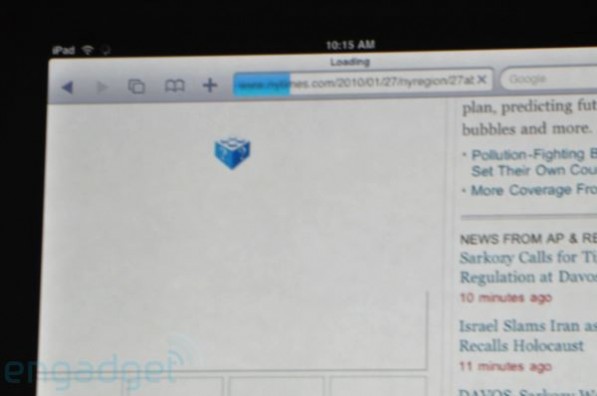
  • It seems iPad lack of Flash support is the debate of the moment. On one camp: “You can’t use the web without Flash”, on the other camp: “We don’t need no stinking Flash”. Although I do realize how a technology like Flash is sometimes needed, I’m more on the second camp. The less flash, the better.

    I think iPad’s lack of Flash cause two things to happen:

    • Slow down the adoption of the iPad: surely someone will say “No Flash, No iPad“.
    • Speed up the adoption of HTML5: surely someone will consider using HTML5 to support the tablet.

    Giving that the iPad is a closed device, probably the closedest non-phone computer consumers ever had access to and that HTML5 is good progress for the web, I consider both results of the iPad not having Flash positive. If I have to say anything about it, it’d be: please, stop trying to wake Steve Jobs up regarding this, you’ll ruin it.

  • SpamMy email address, pupeno@pupeno.com, existed since around 1998 and was never obfuscated or protected in any way. Spam wasn’t such a huge problem in those days. Today my Spam folder has 3200 mails.

    My spam filter is quite good, but I still like going through my spam in case some non-spam message was thrown in there. I’ve tried cleaning it weekly, daily, whenever I have free time and even inbox zero. It’s a hassle and I’m tired of it.

    My new way to deal with spam is ignoring it. Since my spam is deleted automatically whenever it is more than 30 days old, filling up my inbox won’t be my problem; and whenever I someone tells me “I’ve sent you an email, haven’t you receive it?” I’ll be able to search for it and find it if it was on the spam folder unless it’s more than 30 days old. The cases I won’t be able to spot are mails that just went there. Life is tough.

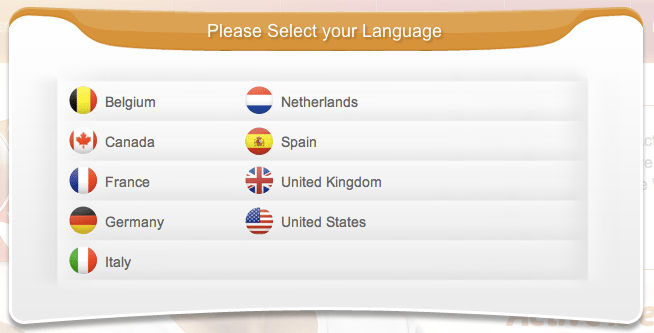
  • I apparently speak Spain, United States, United Kingdom and Canada.

    I would also like to speak Germany because it might be useful in Switzerland, you see, in Switzerland they speak a version of Germany, something like Swiss Germany.

    As seen on http://easportsactive.com. And by the way, the reason why I was at their site is to try to figure out whether EA Sports Active, here in Switzerland at least, comes multilingual or not. From the box it seems to be only in German (or should I say Germany?), searching on-line I’ve found conflicting results. It seems EA Sports doesn’t dig multilingualism, they should support Esperanto to not have to deal with that problem (of course I’ve had to drop some Esperanto propaganda!).

  • 150 years ago a great man was born. His name was Ludovic Lazarus Zamenhof and he was born to a world divided by language, a world of constant violence between polish, jews, russians, etc. All speaking different languages. He thought the problem of the world was that people could not understand each other and set himself the task of fixing it.

    He invented what latter on became know as Esperanto. You can go to the Wikipedia and check the article on Esperanto and on Zamenhof to get a lot of encyclopedic information. If you want to actually taste or learn the language, my recommendation is to go to Lernu. And with that you can learn your first Esperanto word (if you don’t know any yet): lernu means learn, as in “you learn”. Lerni means to learn.

    In this post I will tell you some things I find interesting about Esperanto.

    Let’s go on with lerni. School is lernejo. See the relationship? lern – ej – o is school. Ej means a “a place for”, so lernejo is literarily a place to learn. There are other places like laborejo, which is the place to work. Laboro means work (think of ‘labor unions’).

    Zamenhof thought about the task of creating the Esperanto dictionary and the task was so big he thought it was the end. Until he came up with the idea of allowing people to build words. My English-Esperanto, Esperanto-English dictionary is 75% for English, 25% for Esperanto. There are less words to learn in Esperanto.


    Did you know the Wikipedia is available in Esperanto? If you go to wikipedia.org, you’ll see it among the languages with more than 100000 articles.

    Esperanto Wikipedia

    And if you go to the English wikipedia homepage, Esperanto is the only constructed language listed on the left column. Do you want to know something amazing? Vikipedio, the Esperanto Wikipedia is actually bigger than the Encyclopedia Britannica.

    The legend goes that Zamenhof released his book about Esperanto, called La Unua Libro (the first book) and six months latter someone nocked at his door speaking Esperanto and asking to practice the language. Esperanto spread like wildfire, unlike any other constructed language.


    Pasporta-servoToday it is estimated that there are 2 million Esperantists in the world. If you consider that 122 years ago there was only one Esperanto speaker, it’s growing quite fast. I would expect its growth is accelerating but it’s very hard to know. No census asks about Esperanto. I know someone that made a informal survey asking for people that spoke Esperanto on the streets of Zürich and then actually asking questions in Esperanto and he got 3% positive response.

    Those 2 million speakers are not concentrated in one location, they are spread through the world so you are very likely to find Esperanto-speakers everywhere if you know where to look.

    There are even an estimate of 1000 native Esperanto speakers. Basically that happens when a family is formed by a man and a woman who only share Esperanto as a common language. Even if they don’t actively teach their children Esperanto, they learn to be able to understand their parents. I know a couple of people that speak it natively.


    When talking about how many people speaks the language, it’s important to mention that Esperanto speakers were hunted by many totalitarian goverments. The Nazi government specially targeted them because Zamenhof was jewish and according to Hitler as expressed in his My Fight, Esperanto was the language to be used by the International Jewish Conspiracy to set a new world order.

    In the Soviet Union Esperanto was embraced at first. Most socialists parties saw the potential for international communication and understanding. Joseph Stalin saw it as a way to spread the ideals of communism until they realized that it was a two way street, new ideas would come from outside, including capitalism, and denounced Esperanto as the language of spies. Imperial Japan didn’t like the language either.

    In all those cases of totalitarism, Esperanto was forbidden and Esperantists hunted, exiled or even executed.


    The first Esperanto congress was held in 1905, bringing 600 people together from across the world. since then it was held every year except during the world wars with an average of 2000 participants. When it was done in China it was the biggest gathering of foreign people ever to happen in China.


    There’s a very practical reason to adopt Esperanto. Currently we waste a lot of resources pretending English is an adequate medium of international communication and in translation. Let me give you one example. In 1975 the World Health Organization denied the following requests:

    • $ 148,200 to improve the health service in Bangladesh
    • $ 83,000 to fight leprosy in Burma
    • 50 cents per patient to cure trachoma, which causes blindness.
    • $ 26,000 to improve hygiene in the Dominican Republic

    All those requests denied. It seems the World Health Organization didn’t have much money. But that same year they approved Arabic and Chinese as working languages requiring lots of translations and increasing the expenses of the WHO by $ 5,000,000 per year. That’s right, 5 million dollars per year spent on translation when they couldn’t give 50 cents to cure trachoma.


    Esperanto is probably the easiest to learn usable language out there. The Institute of Cybernetic Pedagogy at Paderborn compared how long it would take French speaking people to learn different languages to reach the same level:

    • 2000 hours studying German
    • 1500 hours studying English
    • 1000 hours studying Italian
    • 150 hours studying Esperanto

    Yes, a tenth of the time it takes to learn English and less than that when compared to German. And something very interesting happens here. The third language you learn takes less effort than the second one.

    If you want to learn another language, let’s say, German, it’ll take you less time to learn Esperanto and then learn German than to just learn German. Yes, you’ve read right. Less time to learn two languages than one.

    That experiment was done by teaching one year of Esperanto and four of French to some students while five of French to others. The amount of time studying was the same but those that spoke Esperanto first reached a better French level. So even if you never utter a single Esperanto word out there, it makes economical sense to learn it first, before you learn another language.


    Many said that Esperanto will never take off and they proceed to never learn it and accept a divided broken world. If you are among those, I’m sorry about your defeat. I’d rather hope and do my part and learn Esperanto. It’s not that hard.

  • mikPmjuI still haven’t found a good music player, for my computer that is. The one that got the closest to it was Amarok, but still it was very far away. My problem is that I don’t know what to listen to, really! I’m only just finding out what music to use  for coding. There’s one thing I really want from a music player: for it learn what to play for me. It’s not the same as learning what I like. It’s much more complex. Amarok learns what I like, but not really what to play for me.

    In Amarok, when you jump to the next song it checks how much of the song you listened and assigns a score based on that. For songs that you listen completely you get a high score and for songs you listen only for a couple of seconds a low score. Over time, as you listen, those you like most and listen most will get high scores while those you despise and jump immediately will get a lower score.

    Amarok has a special playing list, or used to have in the 1.4 version, which is called “dynamic” and plays those songs with the highest score. That sounds excellent, but it’s not enough. This music player I’d like to have would not compute how much I like a song, like Amarok, but how probable it is that  I’ll like it when it plays that song.

    Let’s call this player Pamup, Pablo’s Music Player, and let’s see how it could provide such a magic feat as playing songs that you want to listen (even if you don’t know you want to listen to them).

    Pamup would have a scoring for the songs but instead of being a linear score it’ll be multidimensional. Let’s start with two simple dimensions and the rest will be clear: percent of playing time and time of the day. Song A you play 100% and song B 50%. That means that you like song A better than B. That is what Amarok does. Pamup would instead record:

    • Song A in the morning: 100%
    • Song B in the morning: 50%
    • Song A in the evening: 50%
    • Song B in the evening: 100%

    You like A as much as B, but you are more likely to want to listen to A in the morning, and B in the evening. Of course adding the time of the day will probably not improve the equation by much. The idea would be to add as many dimensions as possible. Some dimensions may be irrelevant and they should cancel themselves out, like in this case:

    • Song A in the morning: 100%
    • Song B in the morning: 50%
    • Song A in the evening: 100%
    • Song B in the evening: 50%
    In that case, you like A better than B, in the evening and in the morning. The time of the day is irrelevant. Maybe it’s only irrelevant for some songs but not for other:
    • Let it be, I like it at all times.
    • O Fortuna of Carmina Burana, please, don’t wake me up with that (or maybe yes, please do, not sure).

    Maybe it’s irrelevant for some people, but not for others. I don’t know and we don’t need to know.

    I can think of many other dimensions to add to the system and I’m sure many other people will think of more and as technology improves we’ll be able to have even more:

    • What program are you using? I want music that helps me concentrate when I’m using my text editor to write code while I don’t care much about what I’m listen to while web browsing.
    • What are you browsing? Maybe I do care about the music while I’m web browsing. Redditing and Facebooking can be done pretty much with any music, but if I’m at Lambda the Ultimate, I need something to concentrate. Even some analysis of the web site could give some important hints: lot’s of dense text, no pictures, play Mozzart; a photo blog, play whatever.
    • How are you controlling the player? Are you using the keyboard with global shortcuts? you are probably doing something else. Are you using the remote control? you are probably away from the computer. Are you using the mouse directly into the players window with the lyrics window open? Ok, let’s play something with lyrics because you probably feel like reading, maybe even signing.
    • Are you singing? When can find that out using the computer’s microphone. Let’s play things that are in your vocal range, and mostly by the same gender as you are. Let’s also play things you liked singing before.
    • Are you using only one app or switching between various apps?
    • Which apps are you switching with?
    • Is there any other sound coming out from the computer? If so, maybe soothing background music with not much volume is what the player should play.
    • Are you dancing? Let’s disco! You think that’s a tough one? Most smart phones have accelerometers in them, if you have the smart phone on your pocket I’m sure I can find out if you are in the couch or dancing, or maybe moving but not dancing. Even the raw input of the accelerometer could be used as a signal, because it’ll be different depending how tired you are and how you are dancing.
    • Are you alone? You think that’s a hard one as well? Many people are using wifi, so, what’s the strength signal received on other devices on the same network?. If another computer has a similar signal level as yours and it is being used, you probably are not alone. It could also be done using smart phones, although with a smart phone you don’t require to be in use, you require it not to be on the table. If it’s plugged into the computer, you can ignore it, if it’s flat and not moving (accelerometer again), you can ignore it.
    • Who are you with? I hope by now you realize how much we can find out. Let’s make it social, let’s have the app in every device. Why would people install it? Well, when you visit me, if you have it on your device, you’ll device will tell my computer what you like, and my computer knows what I like, so it’ll try to find a common ground for us (and it won’t trust me that much when I skip a song, because maybe it’s you skipping it). We could make you use your own smart phone to skip it, and then Pumap knows who is skipping it.
    • Who are you talking with? If you are talking with other people, using voice recognition you may identify that people, or at least how many there are. If there’s cutlery clater in the background, people are eating, let’s just play background music for a nice evening. If it’s only you speaking, maybe you are in an old land-line phone (if you were using your smart phone, Pumap would know), let’s cut the music altogether, probably it’s distracting.

    I believe this program should not work with special cases but have some very sofisticated machine learning system where we input all these signals and does the right thing. And as more signals become available, they are added and analyzed as well. I would like to have that music program! Because honestly, really, I’m not sure what music I want to listen to. I want my computer to figure it out for me.

  • As stories can be told in first person, or third person, in the form of a diary or a tale, as book or comic or movie; I was thinking that blogging could be a literarly style as well.

    I can think of two sub-genres. Historic and fantastic blogging.

    For historic imagine a blog written in the context of -70 (minus 70) years. So that on October 19th 2009 you’d get a post for October 19th 1939. Who would be the blogger? It could be an important person, what would Churchil blog? Or it could be an unnamed person, an anti-nazi frenchman for example. They could also have a Twitter account! It would be an interesting way to learn history.

    The other genre would be total fantasy. A blogger in the future, imagine if for some strange reason, blog posts of a guy surviving the singularity travel back in time? What if blog posts from a galaxy far away? I would certainly follow those blogs! But of course, it’s hard work that requires a very good writer.

    Another thing that could be applied to any fictional blogging is having a network of blogs. Imagine reading the blogs of a frenchman in the resistance, a nazi soldier, a Russian red-army member. All blogging about the same, from different perspective! What about reading the Twitter feeds of Frodo, Sam, Gandalf, Aragorn, Saruman?

    I think it would be very entertaining.

  • For showing what music I like, keeping track of what music I listen to, discovering new music and finding people with the same tastes I use last.fm. For doing that but with books I use aNobii. Is there anything like that for movies? If not, there’s a market.
  • Docking stationThe post-PC era is when we stop having PCs because we move to something else. You may think that’s unlikely and unrealistic but look at the evidence. At one time we had desktop computers and laptops started to appear. They were just toys for people with lots of money, then they became the second computer of people that spent a lot of time on the go, today most people own a laptop instead of a desktop computer.

    The exodus from the PC is not going to be that easy, because the mobile devices are more different to a laptop than laptops were to desktop computers. But it’s not only leaving PCs for smart phones, also for netbooks. I believe it’s going to happen. Probably not as extreme as the PC to laptop but it’s going to happen. We’ll be using our phones as our primarly way to access data and communicate. And when we come home we’ll plug it in a dock station -that already exists-, so that it can use our nice big speakers -that also exists- and so that we use an external keyboard -that exists in many cases- and a big external screen -that exists, at least in the netbook market-.

    What doesn’t exist yet, I believe, is external processing. When I’m at a bar I won’t play Halo and I’m OK if switching between applications is slow, but when I come home I want my device to become faster. I have seen absolutely no progress at all in being able to add processing power to a machine, to a portable machine. The closer I’ve seen were docking stations, probably IBM, which added better sound and video cards. Sharing processing power is hard, but I think we need it to go mobile.

    Reviewed by Daniel Magliola. Thank you!